
The Rise of Digital Hosts
in Ontario's Hospitality Sector
As Ontario’s hospitality sector continues to evolve, hotels, resorts, and tourism operators face growing pressure to deliver exceptional guest experiences while balancing operational efficiency. From the vibrant tourism hubs of Toronto and Niagara Falls to the serene escapes of Muskoka, Ontario’s hospitality leaders must navigate unique challenges—multilingual guest demands, seasonal labour shortages, and ever-rising service expectations.
AI-powered virtual avatars—what we’ll call digital hosts—are emerging as a strategic solution. But successful adoption requires more than technology alone; it demands thoughtful management, ethical oversight, and alignment with the human essence of hospitality.
Why Ontario Needs Digital Hosts
Ontario’s market presents conditions where AI avatars can thrive as strategic tools:
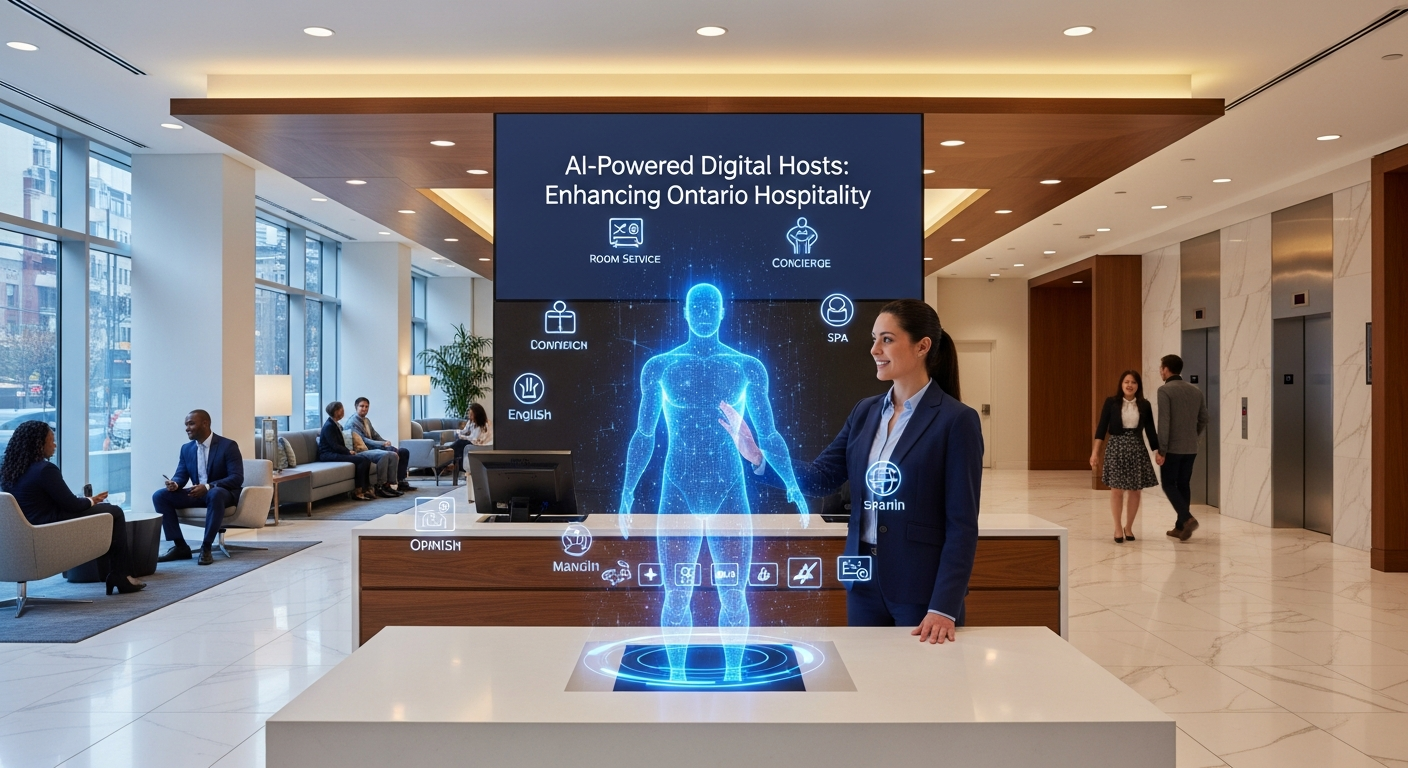
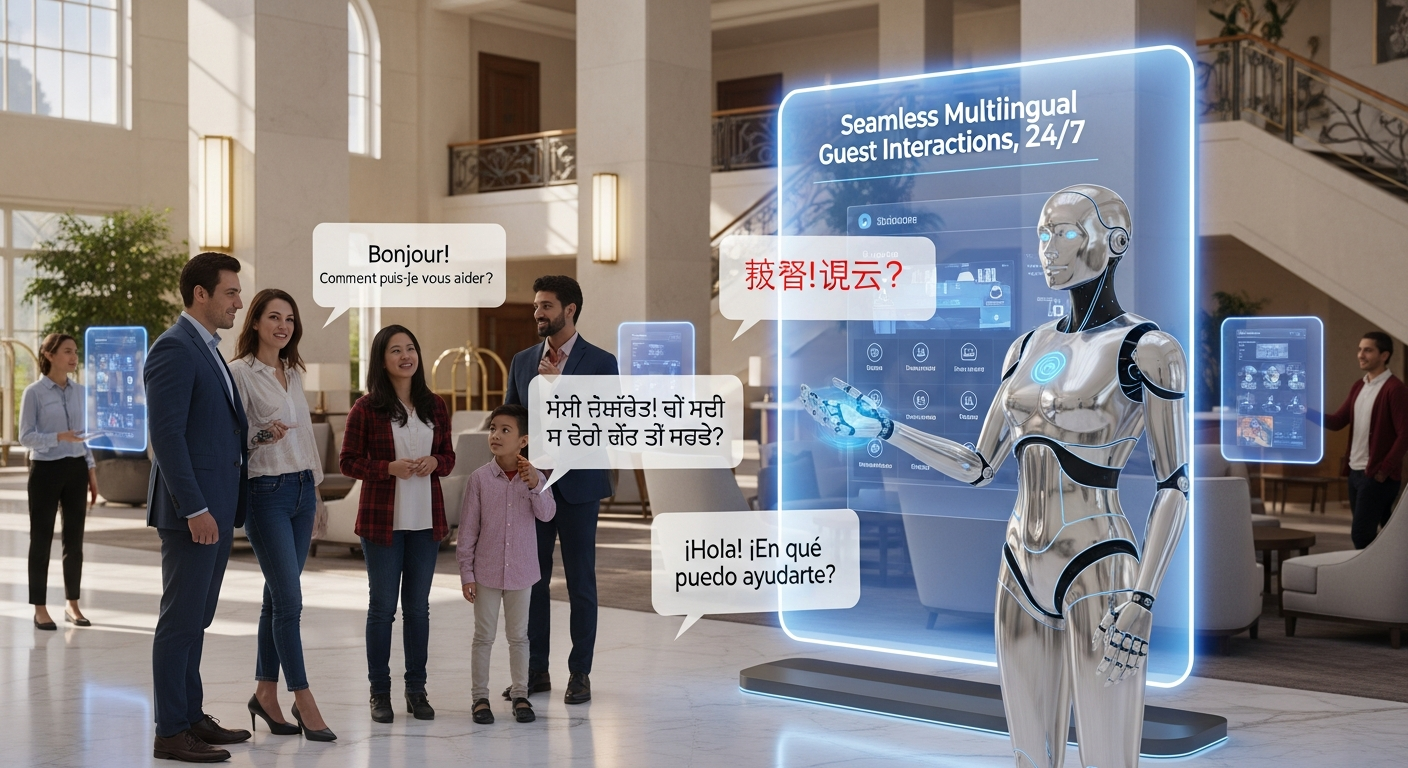
- Multilingual Demands: With millions of international visitors, hotels often need support in French, Mandarin, Punjabi, Spanish, and beyond. AI avatars can seamlessly deliver 24/7 multilingual interactions.
- Seasonal Labour Shortages: Resorts in Muskoka, Blue Mountain, and cottage country struggle to find and retain staff during peak seasons. Avatars can fill gaps without compromising service.
- High Service Expectations: Guests in Ontario expect polished, consistent, and personalized service, often benchmarked against global hospitality standards.
- Urban Competition: With major players in Toronto, Ottawa, and Niagara Falls, local operators must find innovative ways to differentiate themselves.
Strategic Deployment: Balancing AI with the Human Touch
AI avatars must enhance, not replace, the personal warmth that defines Ontario hospitality. Here are the most impactful applications:
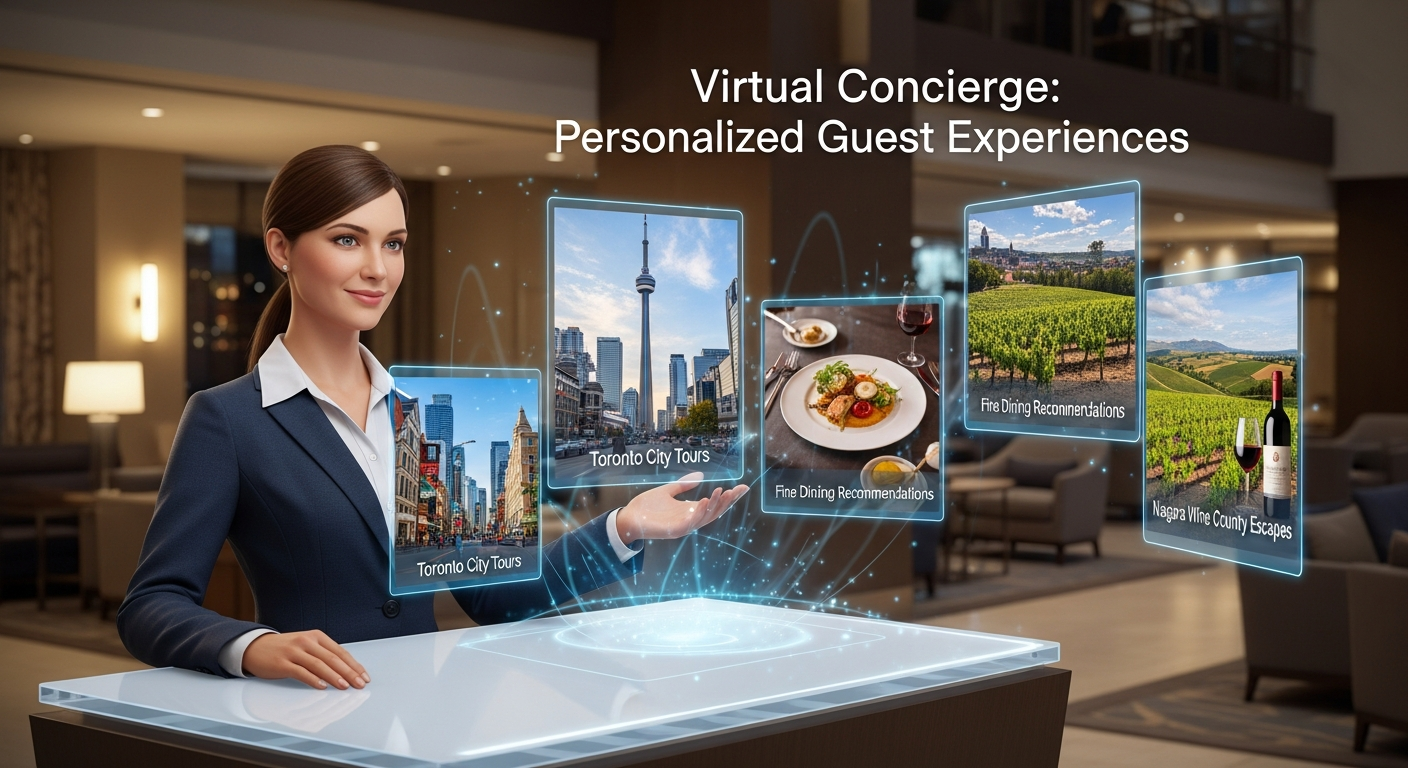
1. Virtual Concierge Offering real-time, multilingual local recommendations—whether it’s the best Niagara wine tour or a Toronto theatre show.
2. Automated Check-In/Out Reducing wait times and freeing staff for more personalized guest interactions.
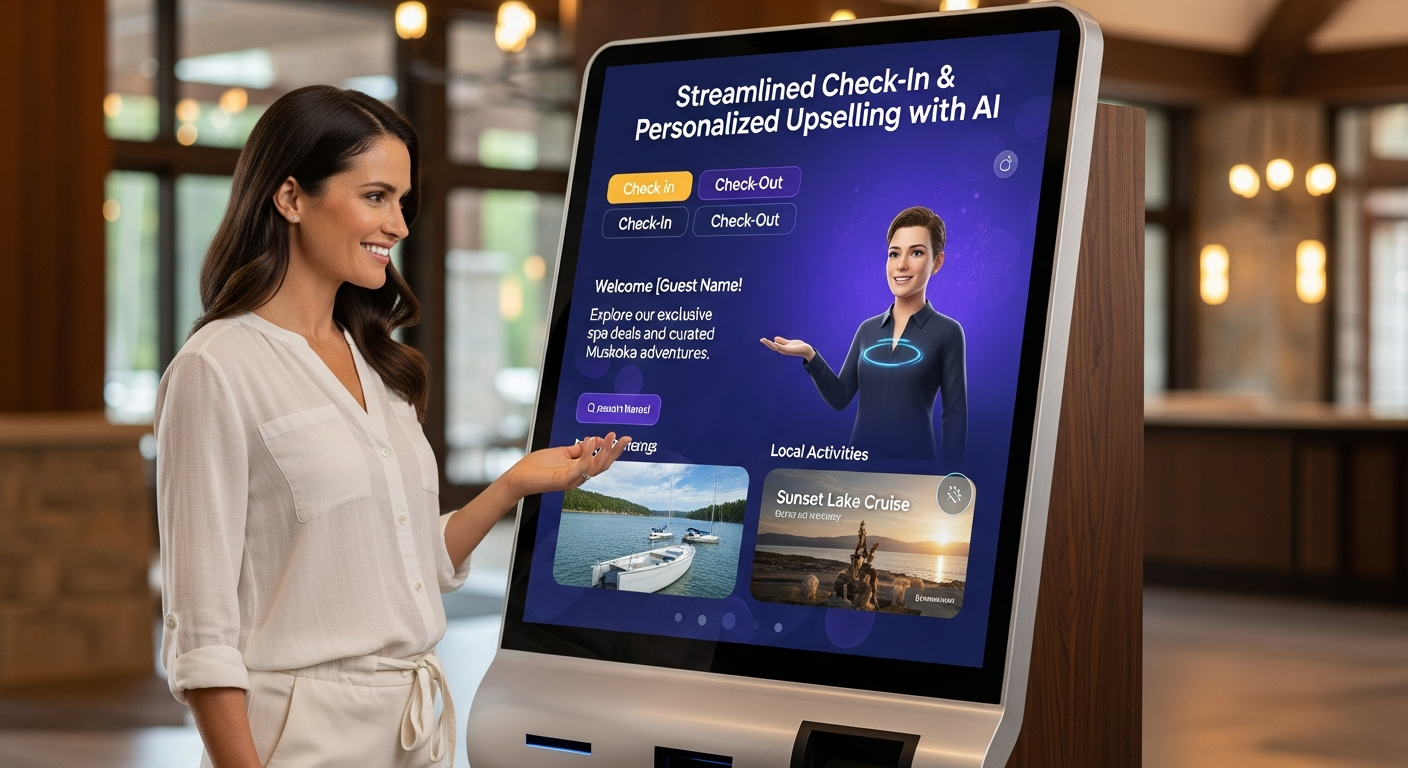
3. Personalized Upselling & Cross-Selling Suggesting spa packages, local craft beer tastings, or Muskoka boat rentals tailored to guest preferences.
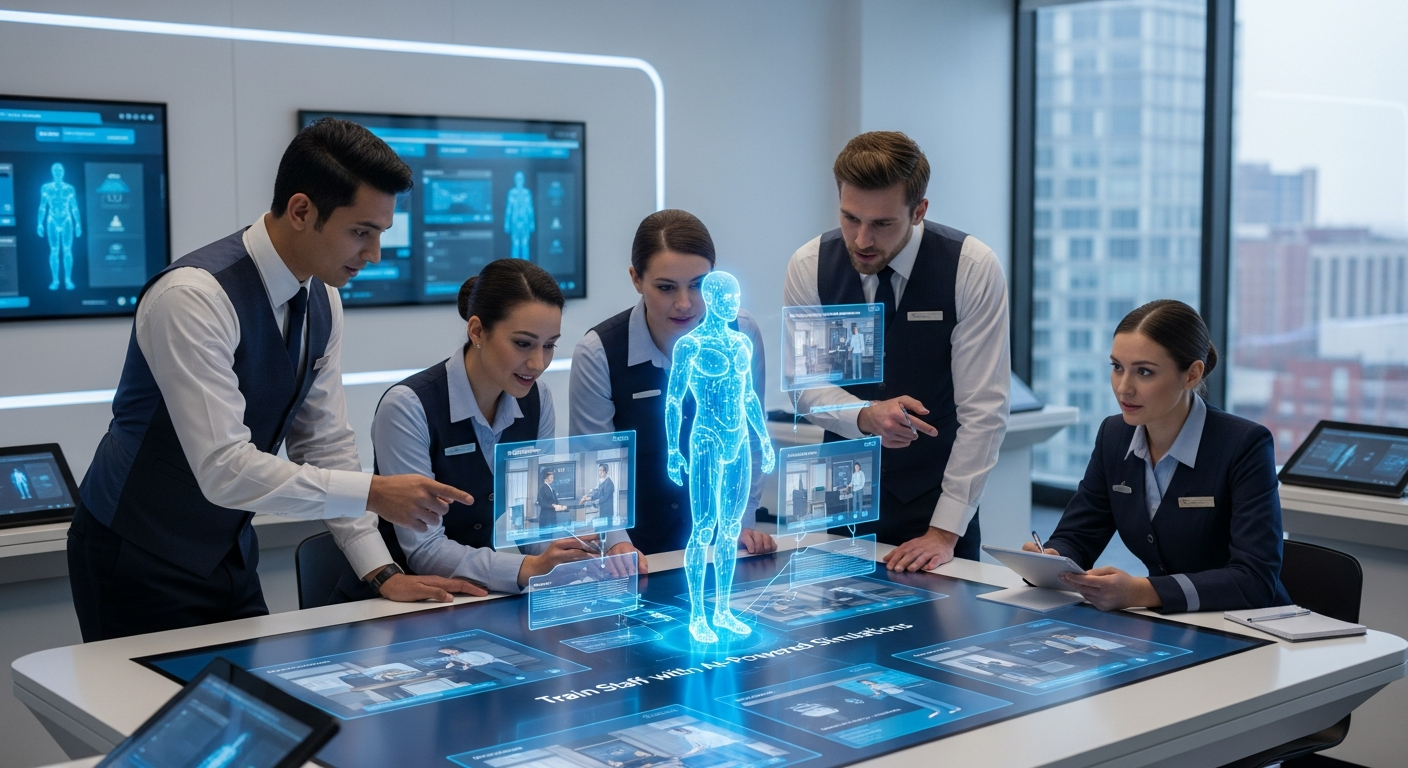
4. Employee Training Simulations Role-playing difficult guest scenarios, ensuring staff practice before the real-world encounter.
The Core Management Pillars
1. Data & Personalization Management
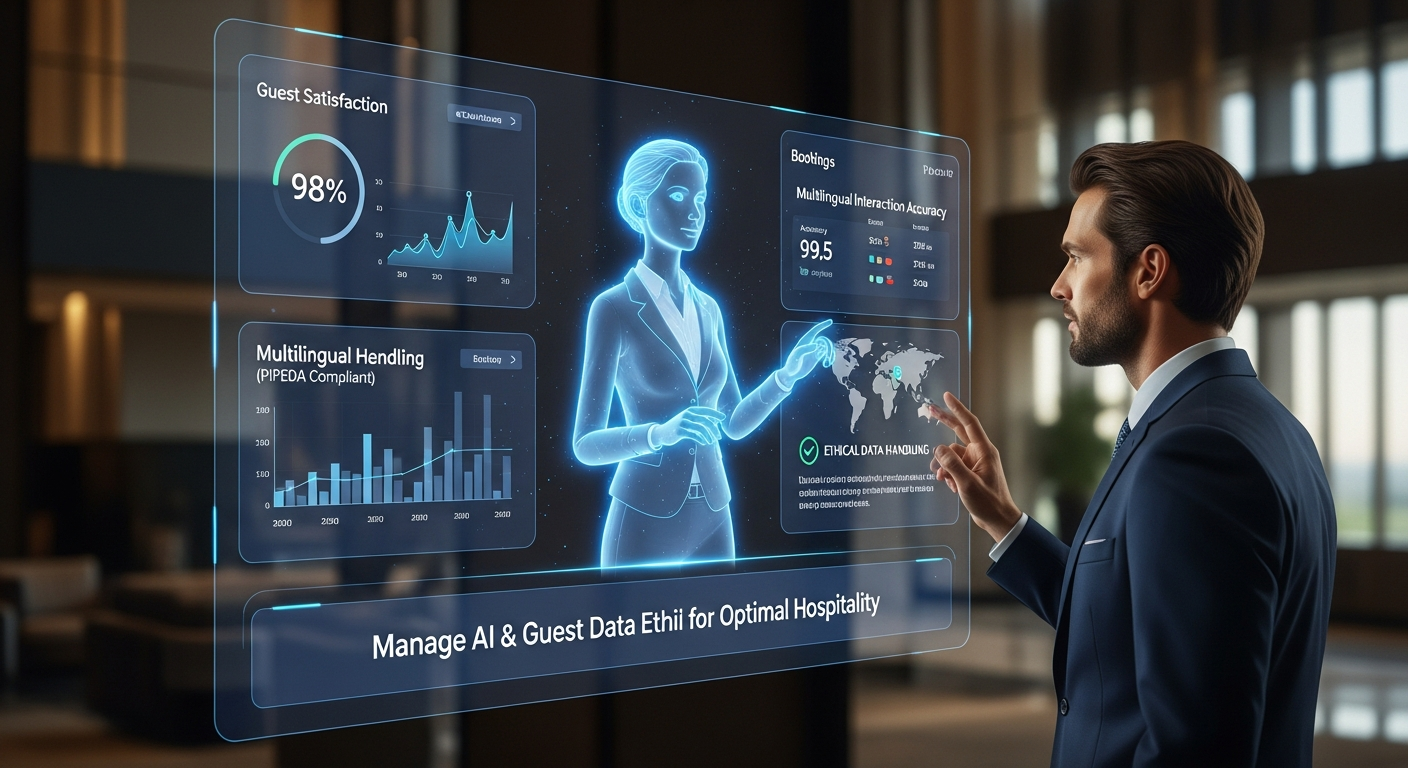
- Collect only what’s necessary, always with guest consent.
- Store data securely, following Canadian privacy standards.
- Use insights ethically to personalize service (e.g., remembering pillow preferences or dietary restrictions).
- Communicate transparently: guests should know how and why their data is being used.
2. Brand & Persona Management
- Tailor the avatar’s personality to reflect your establishment:
- A luxury Toronto hotel may opt for a polished, professional tone.
- A Muskoka resort may prefer a warm, friendly, cottage-country persona.
- Ensure scripts sound authentically local, avoiding generic or robotic responses.
3. Performance & Maintenance Management
- Track KPIs such as: Reduction in front desk calls, Increase in direct bookings, Multilingual interaction accuracy, Guest sentiment analysis.
- Regularly update the avatar’s knowledge base with local events, seasonal offerings, and guest feedback. Monthly performance reviews are recommended.
Risk Mitigation & Ethical Oversight
Poorly managed avatars can damage a hotel’s reputation. Risks include:
- Bias in Recommendations: Avoid AI that only promotes certain vendors or services without transparency.
- Technical Failures: Glitches or downtime during peak check-ins can frustrate guests.
- Privacy Breaches: Mishandled data could lead to legal and reputational consequences.
- “Robot-Like” Interactions: Flat, unempathetic avatars can erode guest trust.
Solution: Train staff to act as “AI Supervisors.” Rather than fearing replacement, employees should be empowered to oversee, troubleshoot, and enhance avatar performance—strengthening human-AI collaboration.
Lead the Future of Hospitality in Ontario
Ontario’s hospitality leaders now have the opportunity to set a global benchmark in responsible AI adoption. Start by conducting a Human-AI Service Audit: